The Short Answer
Truck accidents in Indiana are most often caused by driver error, with issues like fatigue, distracted driving, and speeding leading the way. While mechanical failures can happen, they are a much smaller factor. The most dangerous commercial vehicles in terms of fatal crashes are combination trucks (big rigs and 18-wheelers), and if you’re in a passenger vehicle, you are at the highest risk of serious injury or death. This information can help us understand why these accidents happen, what you should know to stay safe, and what to do if you were hurt in an accident.
Key Takeaways
- Driver error is the overwhelming cause, accounting for approximately 93.7% of all Indiana truck accidents in 2020. (Commercial Vehicles 2020, Indiana University)
- The top driver-related factors are unsafe lane movement, following too closely, unsafe backing, failure to yield right of way, and improper turning.
- Other top driver-related factors include improper lane use, disregarding signal/regulatory signs, speeding, improper passing, distracted driving, overcorrecting, being run off the road, and fatigue.
- Top environmental factors included animals in the road, road surface conditions, obstructed views, and other environmental factors.
- Vehicle-related factors include mechanical failures, especially brake defects, often due to poor maintenance. But these are much less common causes than driver and environmental factors.
- Combination trucks (tractor-trailers, big rigs, 18-wheelers) are the type of commercial vehicle most frequently involved in fatal crashes.
- Occupants of smaller passenger vehicles are most at risk for death, accounting for 65% of fatalities in truck-involved collisions.
- The fatality rate for big truck and bus crashes in Indiana has been decreasing each year since 2022.
Table of Contents
- What Causes Truck Accidents That Lead to Lawsuits?
- Driver Error is THE Most Common Cause of Truck Accidents in Indiana
- Truck Accident Causes Beyond Driver Control
- What Kinds of Trucks Are Most Dangerous?
- Who is Most At Risk in Truck Accidents?
- Who Is at Fault in a Truck Accident?
- Frequently Asked Questions About Truck Accidents
- Don’t Face the Aftermath Alone. Call the Ken Nunn Law Office.
What Causes Truck Accidents That Lead to Lawsuits?
At the Ken Nunn Law Office, we know that understanding the causes of these crashes is the first step toward seeking justice. We’ve analyzed recent data to shed light on the most common causes of commercial truck accidents and to clarify which vehicles are most frequently involved in these tragic events.
| Types of Causes | Primary Causes & Contributing Factors | Examples |
| Driver Error (93.7% of Indiana CV Accidents) | Improper Lane Usage | Unsafe lane movement Improper lane usage |
| Unsafe / Improper Driving | Unsafe lane movement Following too closely Unsafe backing Failure to yield the right of way Improper turning Disregard signal/reg sign Left of center Improper passing Wrong way on one-way | |
| Distracted Driving | General/undefined distractions Cell phone use Other telematics in use | |
| Speeding/Reckless Driving | Speed too fast for weather conditions General unsafe speed | |
| Fatigue / Health | Driver asleep or fatigued Driver illness | |
| Inexperience/Poor Training | Overcorrecting/oversteering Ran off the road | |
| Vehicle Failure (4% of of Indiana CV Accidents) | Brake Defects | Failure Overheating Fluid leaks |
| Tire Problems | Tread separation Defective tires Manufacturing defects | |
| Poor Maintenance | Neglected lights, brakes, tires, and other maintenance | |
| Cargo-Related (No data available for Indiana) | Overloaded Cargo | Exceeding weight limits |
| Improperly Loaded Cargo | Unsecured loadsUnstable loads | |
| External/Environmental (2.3% of Indiana CV accidents) | Adverse Weather | Heavy crosswinds Rain/snow obstructing the driver’s view |
| Road Hazards | Animals on the road Roadway surface conditions Lane marking obscured Obstruction not marked Holes in the roadsurface |
Driver Error Is THE Most Common Cause of Truck Accidents in Indiana
When we think of a crash, we might imagine a sudden mechanical failure or poor road conditions. However, the data tells a different story. According to a landmark report from Indiana University using data from the Indiana State Police, 93.7% of Indiana truck collisions involved driver-related factors.
This means that while external factors like weather conditions play a role, most of these crashes are preventable and are a result of human choices and behavior behind the wheel.
The Top Driver-Related Factors
The term “driver error” is broad, but it includes several specific, dangerous behaviors. The data shows that the most common factors are:
- Unsafe Lane Movement: The primary factor in 19% of driver-related collisions. The driver may have changed lanes without signaling, failed to check blind spots, drifted out of their lane, or straddled the lane. These driver errors often lead to sideswipe collisions.
- Unsafe / Improper Driving: Risky behaviors such as tailgating, failing to yield, or ignoring traffic signals increase the chance of a serious crash.
- Distracted Driving: Even a few seconds of inattention—such as texting, adjusting controls, or eating—can keep a truck driver from reacting in time.
- Speeding / Reckless Driving: Because trucks need much more distance to stop, driving too fast or aggressively makes accidents far more dangerous.
- Driver Fatigue / Health: Despite federal regulations that limit driving hours, many truck drivers still push themselves to work long shifts to meet tight deadlines. This exhaustion leads to impaired judgment, slower reaction times, and can even cause a driver to fall asleep at the wheel.
- Inexperience and Inadequate Training: Drivers without proper training may mishandle dangerous situations. This can include being forced off the road, overcorrecting when a truck drifts, or oversteering in tight turns—all of which can cause rollovers or loss of control.
Driving Under the Influence as a Factor in Truck Accidents
Truck drivers have a significantly lower rate of alcohol impairment in crashes compared to other vehicle types. CV drivers have a much stricter limit for blood alcohol levels than other drivers, and much more immediate consequences if caught.
Impairment, including alcohol impairment, is still a concern on the national level. Fatigue, alcohol, illness, and other impairments were 1 of 10 top driver-related factors in truck accidents reported by the FMCSA.
| FMCSA Percent of Impairment as a Driver-Related Factor for Large Truck Drivers in Fatal Crashes 2020-2022 (p. 31) | ||
| 2020 | 2021 | 2022 |
| 5.2% | 4.1% | 4.8% |
Truck Accident Causes Beyond Driver Control
While driver error is the leading cause, it’s not the only one. Vehicle-related issues were the primary factor in 4% of Indiana truck accidents. While not always avoidable, many more vehicle-related accidents can be prevented with proper maintenance.
- Brake System Defects: Brake failures are the most common mechanical issue contributing to accidents.
- Poor Maintenance: Unfortunately, some trucking companies may cut corners on maintenance to save money. A truck with poorly maintained brakes can take 20-40% longer to stop than a passenger car, a difference that can be fatal.
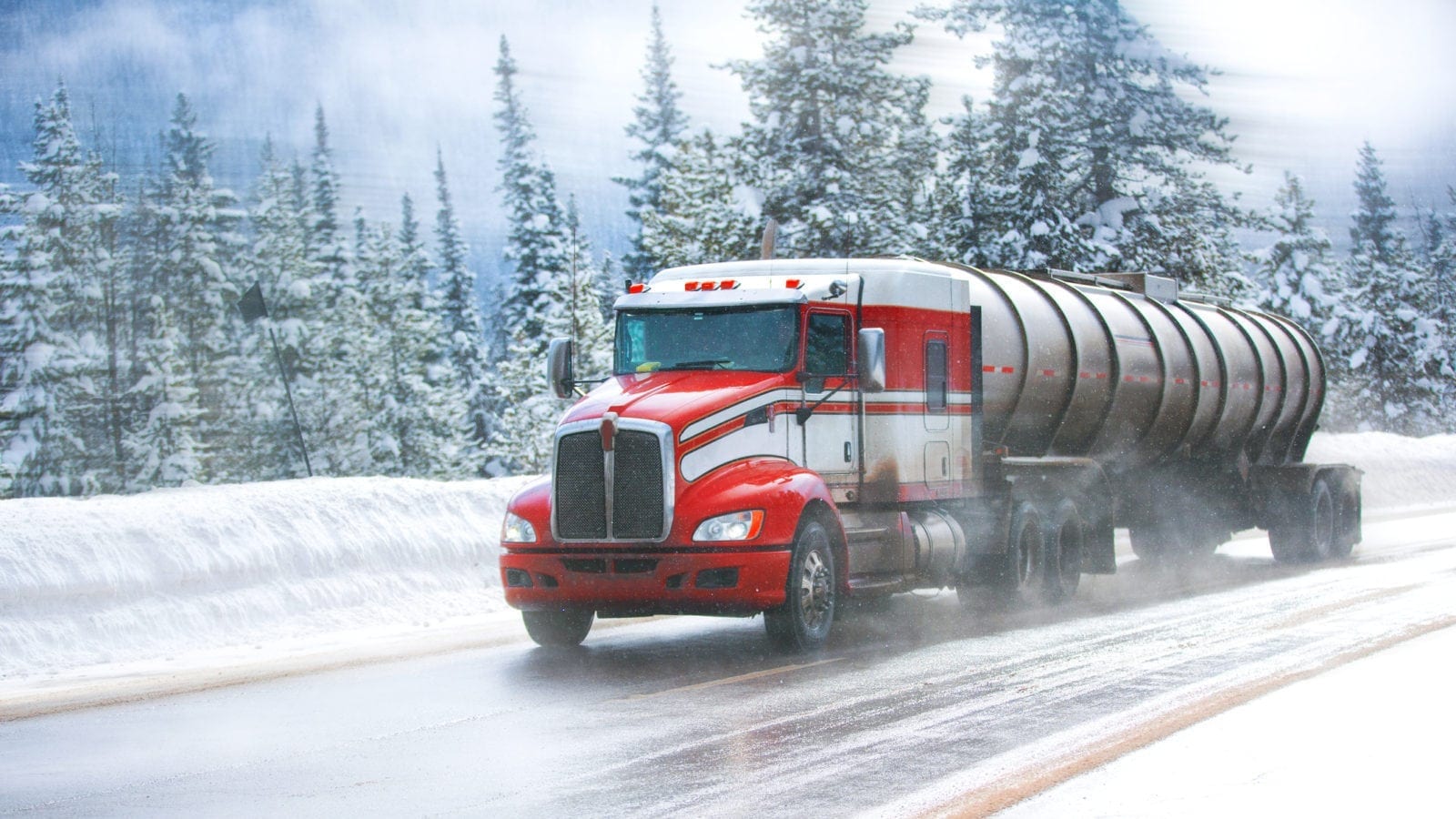
- Environmental and Road Conditions: External factors like adverse weather (dense fog, heavy rain, or icy roads) can dramatically increase the risk of an accident. Similarly, road hazards such as potholes or narrowed lanes can force a driver to make sudden maneuvers that a large truck may not be able to handle safely, especially if they are driving too fast.
What Kinds of Trucks Are Most Dangerous?
The term “large truck” covers a wide range of vehicles, but some are far more likely to be involved in a fatal crash than others. The data clearly shows that combination trucks, also known as tractor-trailers, big rigs, or 18-wheelers, are disproportionately involved in the most severe accidents.
While we are most concerned with large trucks, commercial vehicles also include other heavy vehicles that pose a risk to other drivers. If you’ve been injured in an accident with the following vehicles, contact an Indiana truck accident lawyer for legal help.
- Buses
- Delivery trucks/vans
- Flatbed trucks
- Dump trucks
- Cement mixers
- Tow trucks
- Refrigerated trucks
- Fuel tankers
- Utility trucks
Who Is Most at Risk in Truck Accidents?
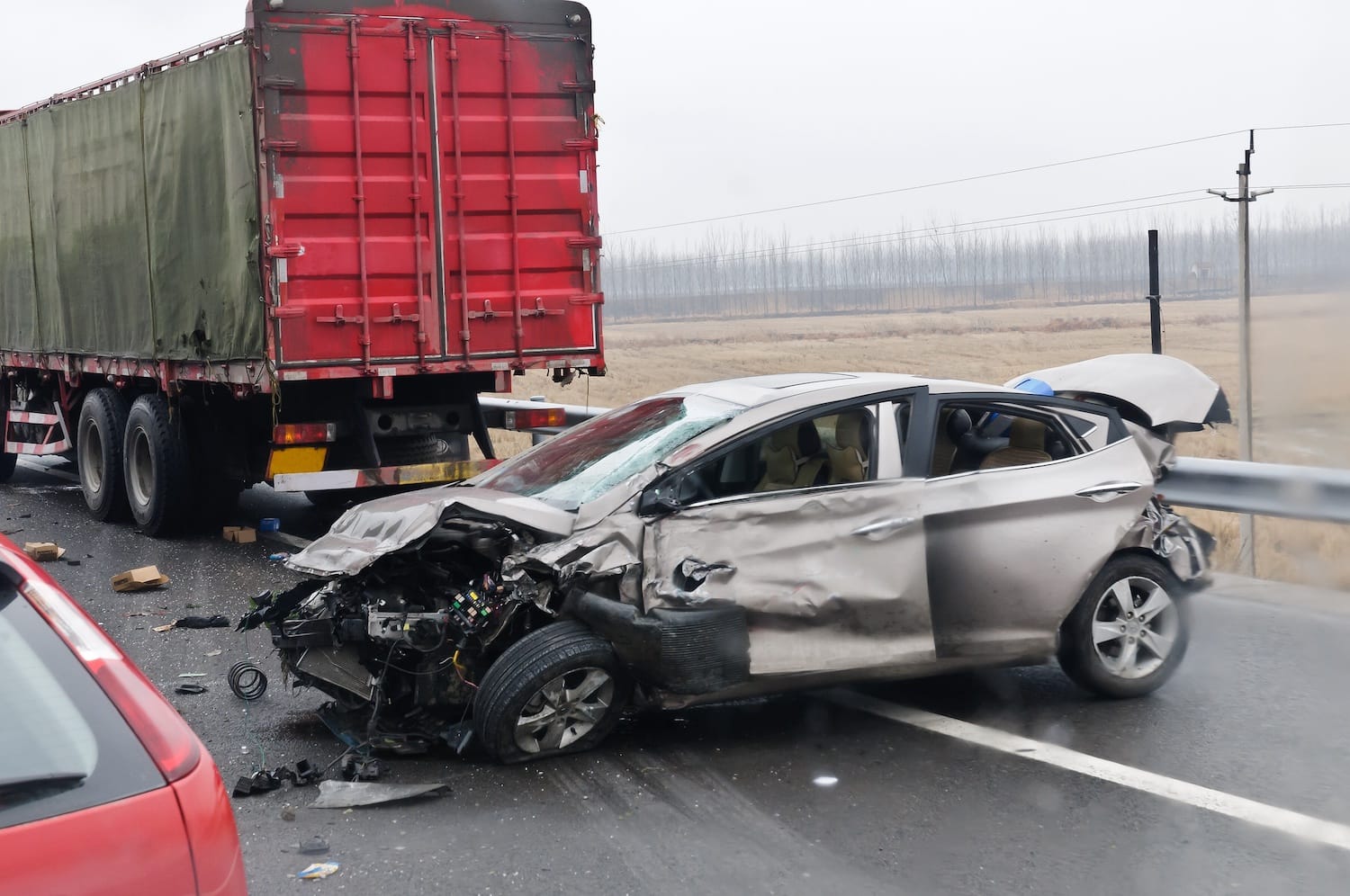
Any other kind of driver is most at risk for serious injuries when it comes to truck accidents. In crashes involving a large truck, the occupants of the truck are typically much safer than those in the smaller vehicle.
On the national level, in 2023, a shocking 65% of all fatalities in large truck crashes were occupants of other vehicles (IIHS).
Who Is at Fault in a Truck Accident?
In a car accident, determining fault usually comes down to the drivers involved. However, truck accidents are far more complex. The large number of parties and the stringent regulations governing the industry mean that multiple entities could be held liable.
- The Truck Driver: This is the most common at-fault party. If a driver was fatigued, distracted, speeding, or made an improper maneuver, they can be held liable.
- The Trucking Company: The company that employs the driver can often be held legally responsible for the accident. This is especially true if they engaged in negligence by:
- Failing to properly train or vet the driver.
- Pressuring the driver to violate Hours-of-Service rules.
- Neglecting routine vehicle maintenance.
- Improperly loading or securing cargo.
- The Truck Manufacturer or Parts Manufacturer: In cases where a mechanical failure, such as a brake failure or a tire blowout, was the direct cause of the accident, the manufacturer of the truck or the defective part could be held liable. This would fall under product liability.
- Cargo Loaders or Shippers: If an accident was caused by an overloaded or improperly secured cargo, the company responsible for loading the cargo could be at fault.
Proving liability in a truck accident requires a thorough investigation, often involving accident reconstruction specialists, vehicle mechanics, and a review of the company’s maintenance and training records.
Frequently Asked Questions About Truck Accidents
Distracted driving is a major contributor to truck accidents. Because of their long stopping distance, even a few seconds of inattention can prevent a truck driver from reacting to traffic ahead. Distractions can include everything from using a mobile device for talking or texting to eating, adjusting the radio, or simply daydreaming. The FMCSA has specific rules prohibiting commercial drivers from using handheld mobile devices, but violations still occur frequently.
Driver fatigue is a leading cause of truck accidents because it impairs a driver’s judgment and reaction time in the same way alcohol does. It can lead to poor decision-making, such as speeding or unsafe lane changes, and can even cause a driver to fall asleep at the wheel. The pressure to meet tight deadlines and work long hours often encourages drivers to ignore their own fatigue, making this a critical safety issue.
It’s more accurate to say that fatalities are more likely to happen in commercial motor vehicle (CMV) accidents due to the nature and risk factors of these accidents. Because large trucks can weigh up to 80,000 pounds when fully loaded, a collision with a 3,000-pound passenger car is often catastrophic.
In Indiana, the fatality rate for CMV crashes in 2024 was closer to 2.5%, or 135 deaths in 5,758 crashes. Looking at the percentages, the rates can seem small, but if you knew or were related to someone who died in one of these accidents, you deserve to seek compensation for your loss.
Hours of Service (HOS) rules are federal trucking regulations designed to prevent driver fatigue by limiting how long a truck driver can be on duty or behind the wheel. When these rules are followed, they can significantly reduce the risk of accidents. However, when a driver or a trucking company violates these rules—for example, by falsifying logbooks or pressuring a driver to work longer than legally allowed—it directly increases the risk of a fatigue-related crash. Violations of HOS rules are often a key factor in proving fault in a truck accident case.
The most important step is to seek medical attention immediately. Once you’re safe, you should contact an experienced truck accident attorney as soon as possible. The legal process for these cases is incredibly complex and requires a deep understanding of federal trucking regulations, insurance policies, and liability laws. An attorney can help you investigate the crash, identify all at-fault parties, and fight to help ensure you receive the compensation you deserve to cover your medical bills and other damages.
Don’t Face the Aftermath Alone. Call the Ken Nunn Law Office.
Truck accidents are complex, and holding the responsible parties accountable—whether it’s a fatigued driver, a negligent trucking company, or a manufacturer—requires knowledge and skill. The Ken Nunn Law Office has extensive experience handling these cases and fighting for the compensation accident victims deserve.
If you or a loved one has been injured in a truck accident, don’t wait to get legal help. Contact us for a free, no-obligation consultation to understand your rights and options.